Firefly NG
A heavy-lift hexacopter designed and built by UVic AERO during my time as Chief Engineer for the club
Overview
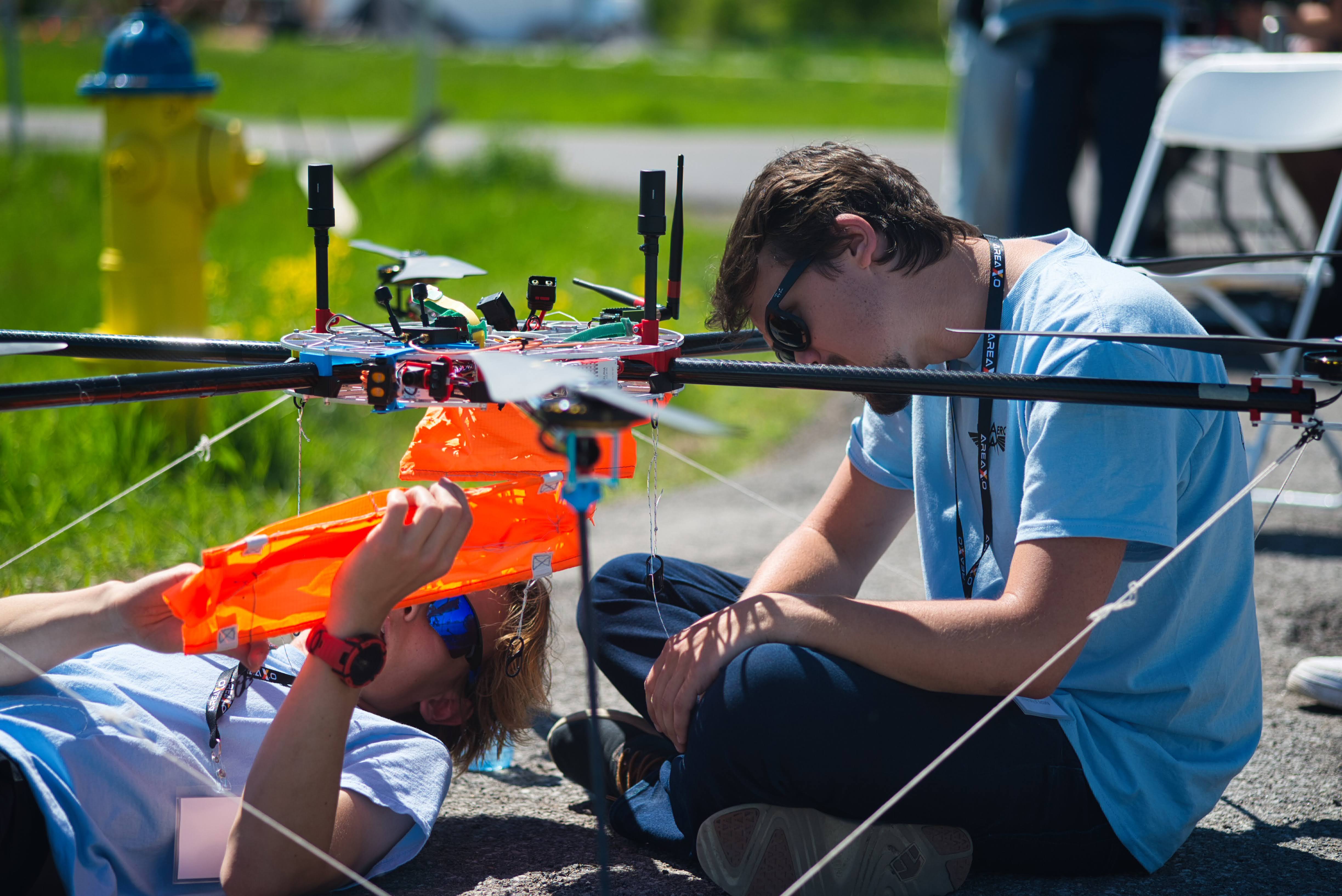
The Firefly NG, or Firefly Next Generation, is one of UVic AERO’s 2026 competition UAVs - an unmanned aerial vehicle purpose built for staging heavy firefighting gear at the scene of the fire before firefighters arrive. It’s an evolution of the Firefly platform, originally designed for the Aerial Evolution Association of Canada’s 2025 wildfire fighting competition.
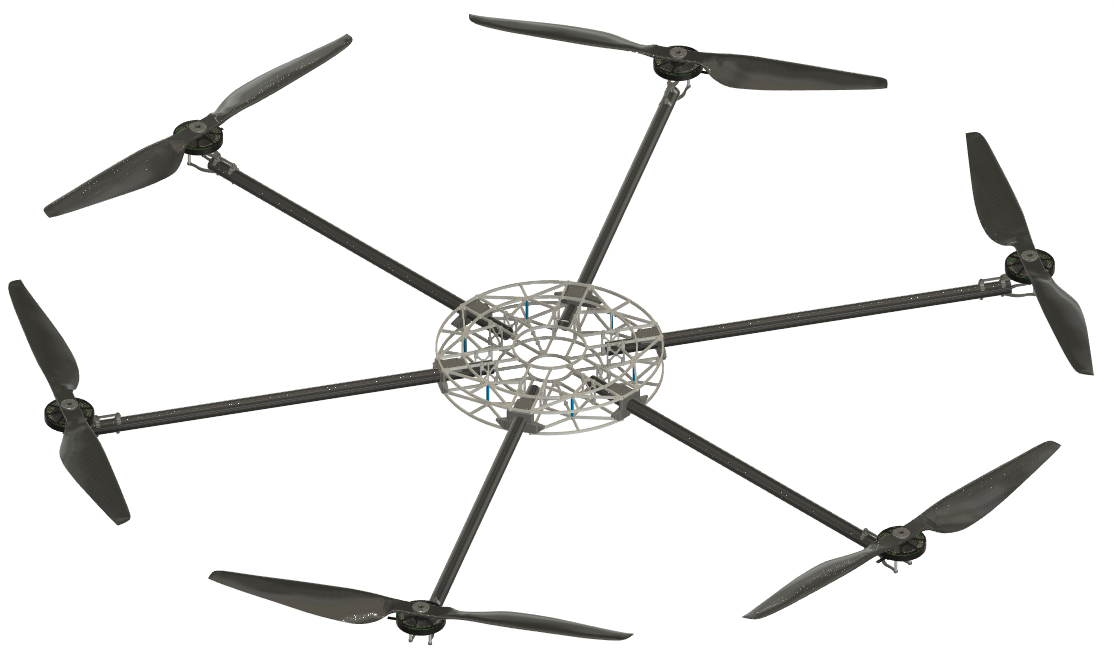
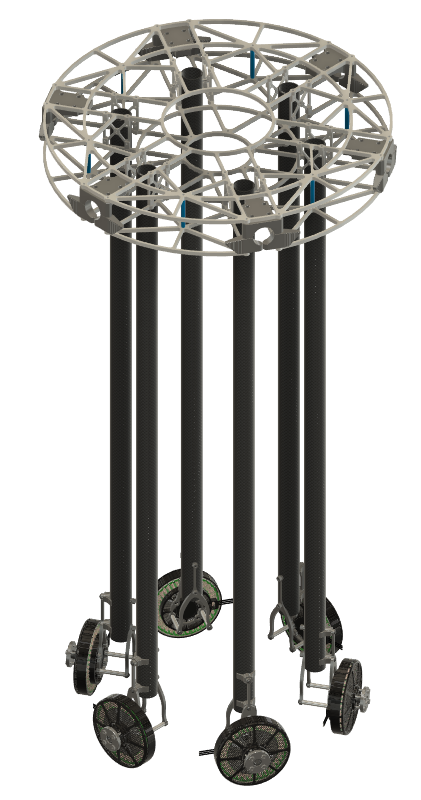
Firefly NG is a six rotor UAV with a 2.5 m footprint and a maximum takeoff weight of 30 kg. AEAC competition safety restrictions limit this all-up weight to 15 kg. At approximately 5 kg with batteries installed, it leaves up to 10 kg available for equipment and mounting systems. The platform is designed to carry items such as ladders, air tanks, and radios, giving firefighters access to essential gear at locations that may be difficult or slow to reach on foot. As with all of the UVic AERO hexacopter family, it features folding arms to allow for tight storage.
The main improvements over the original Firefly are a lighter structure and a higher capacity battery system. The original carbon fibre frame plates and motor mounts were replaced with optimized 6061 aluminium parts, helping reduce the aircraft’s overall weight by roughly 2 kg. Combined with a switch from lithium polymer to lithium-ion batteries, these changes brought its estimated mixed-flight endurance to around 35 minutes, compared to 19 minutes for the original platform.
The equipment mounts are designed to be lightweight and mechanically simple. Adjustable hooks carry a ladder beneath the aircraft and release it when the vehicle lands at the delivery location. Nylon slings hold the air tank and radio, with servo-operated latches allowing them to be released independently. Dual GPS and compass systems, parallel batteries, and live battery monitoring provide redundancy and help the flight crew track the aircraft’s condition throughout the mission.
My contribution
As Chief Engineer for the 2025-2026 competition season, my main responsibilty was coordinating design work between the mechanical, eletrical, and software sub-teams. I also, alongside the AERO executive team, guided early design cooncept selection.
Once design work became more detailed, my focus shifted to communicating with the competiton organizers and supporting the sub-team leads.
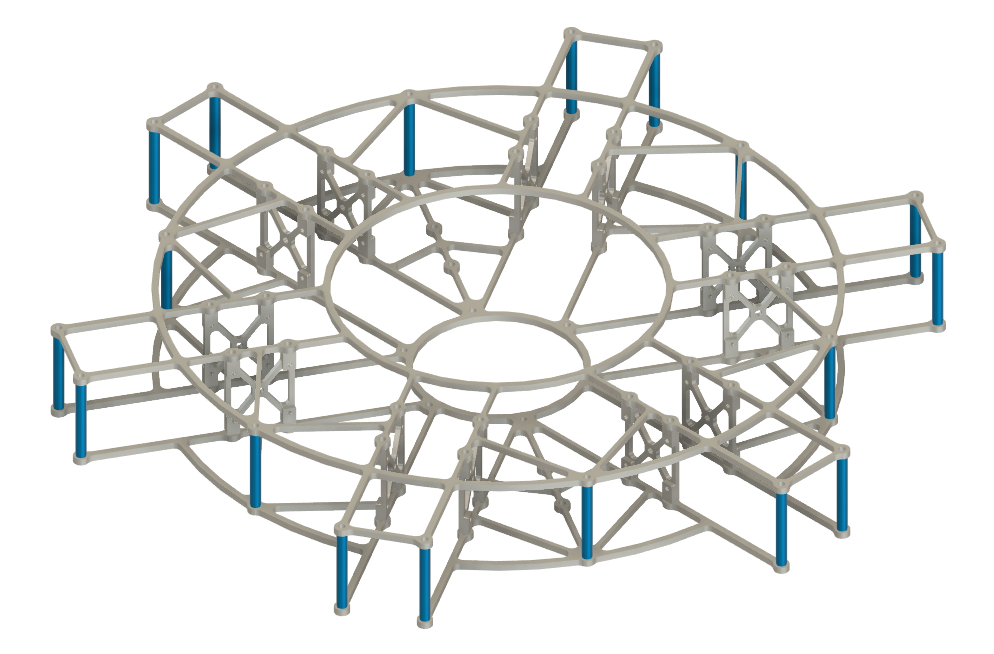
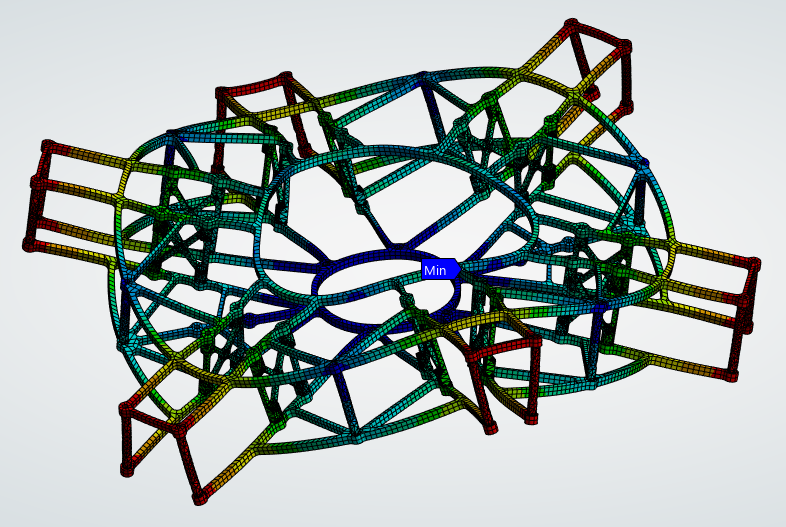
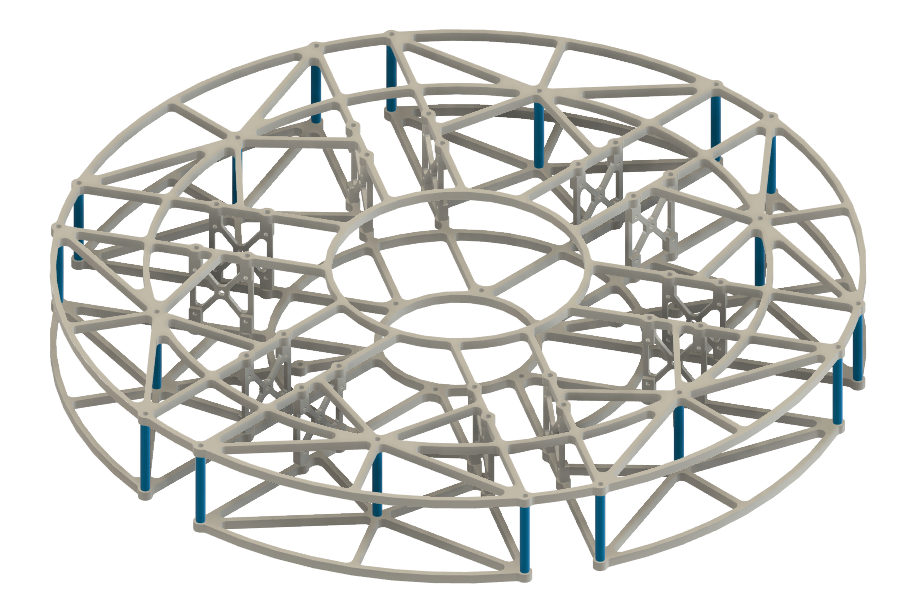
My first love is mechanical design, however, so I also made time to design the Firefly NG’s new 6061 frame and helped with structural validation. Assisting with payload mounting designs scratched that itch to design in the latter stages of the project. I had to beef up the optimized frame after initial testing revealed that the optimized mass placed the hover frequency too close to one of the frame’s resonance frequencies.
As the competition date neared, I acted as one of the flight test pilots for the team, testing new payload configurations and gathering telemetry data for aircraft tuning.
The final hurdle was organizing team travel and equipment shipping from Victoria to Ottawa with Li-Ion batteries that most shipping companies outright refuse to fly. Getting insurance coverage for multiple student-designed experimental UAVs was no small order either.
The AEAC 2026 UAS competition had many of its own challenges, but the experience was amazing and I couldn’t have asked for a better team to tackle it with.
Photo gallery
Select a photo to enlarge it.