Cicada
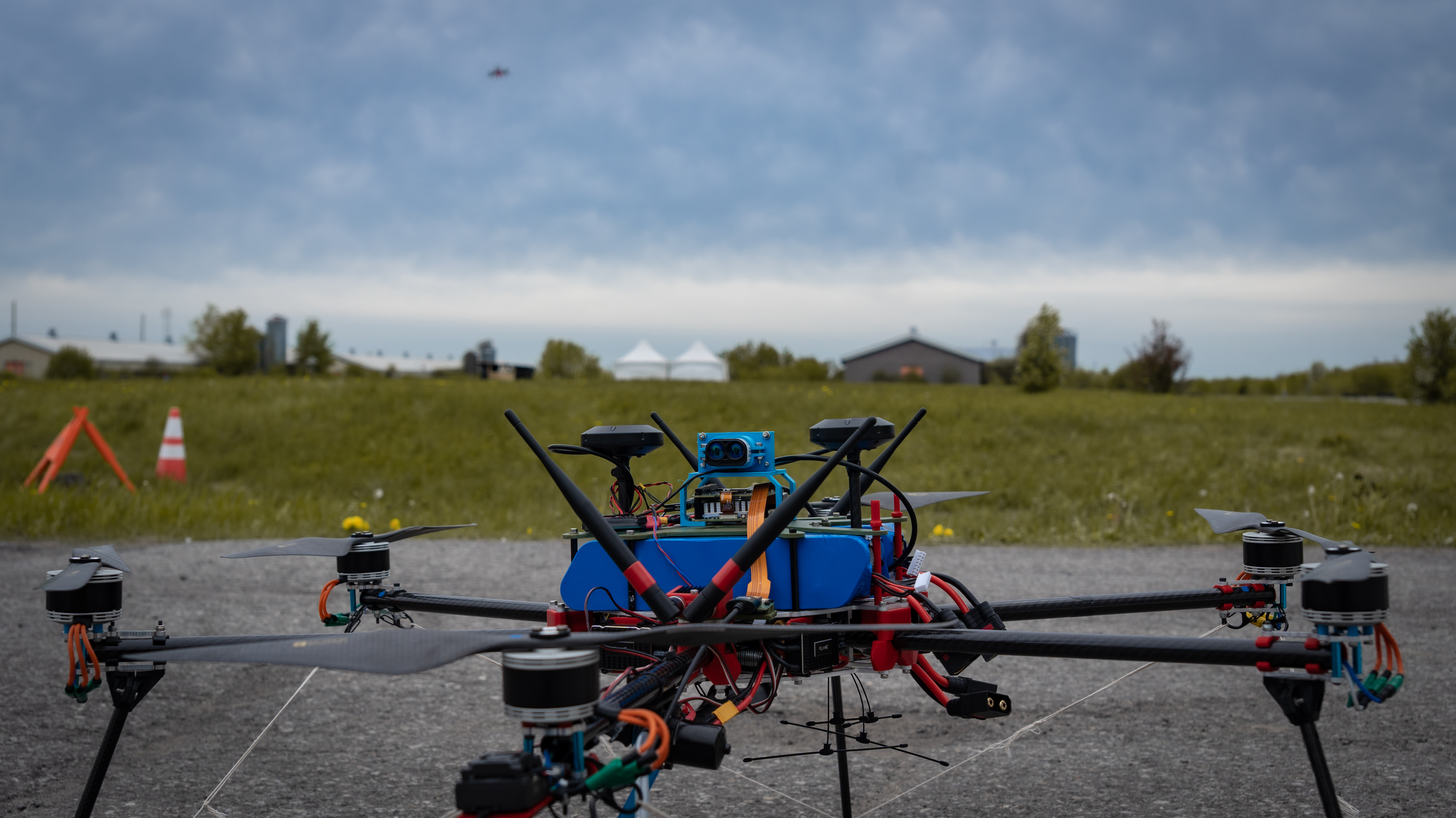
A Hexacopter designed and built by UVic AERO during my time as Chief Engineer for the club
Overview
The Cicada is a six rotor UAV designed to locate and spray simulated fires in and around buildings. It differs from UVic AERO’s other hexacopters in that it flies in a “+” configuration, rather than the traditional “x” configuration, to better accomodate its sprayer nozzle. It shares the same lithium-ion battery system as the Firefly NG, but uses a smaller, lighter frame suited to operating in confined spaces. With a 1.7 m footprint and an empty weight of approximately 4 kg including batteries, Cicada is designed to carry a 1 L water tank and targeting system for around 30 minutes.
Cicada’s design prioritizes maneuverability and flight time with a relatively light payload. Its maximum thrust is 24 kg, with an estimated mixed-flight endurance of 32 minutes and a hover time of approximately 25 minutes at maximum weight. The smaller footprint gives the aircraft more clearance when positioning near walls and navigating around structures.
The spraying system uses a 12 V automotive windshield washer pump connected to a custom 3D printed nozzle. A small servo adjusts the nozzle’s vertical aim, while the aircraft yaws to aim horizontally. Target distance and obstacle sensing is provided by a single point LiDAR module mounted next to the nozzle.Target detection is handled by a Raspberry Pi 5 running a YOLOv11 computer vision model trained on coloured competition targets. Cicada has successfully sprayed indoor and outdoor targets, both in manual and autonomous mode.
My contribution
As Chief Engineer for the 2025-2026 competition season, my main responsibilty was coordinating design work between the mechanical, eletrical, and software sub-teams. I also, alongside the AERO executive team, guided early design cooncept selection.
Once design work became more detailed, my focus shifted to communicating with the competiton organizers and supporting the sub-team leads.
My first love is mechanical design, however, so I also made time to design the Cicada’s 6061 frame and helped with structural validation. Assisting with payload mounting designs allowed me to scratch that design itch in the latter stages of the project.
As the competition date neared, I acted as one of the flight test pilots for the team, testing new payload configurations and gathering telemetry data for aircraft tuning.
The final hurdle was organizing team travel and equipment shipping from Victoria to Ottawa with Li-Ion batteries that most shipping companies outright refuse to fly. Getting insurance coverage for multiple student-designed experimental UAVs was no small order either.
Competition had many of its own challenges, but the experience was amazing and I couldn’t have asked for a better team to tackle it with.
Photo gallery
Select a photo to enlarge it.